- Vital Sparks
- Posts
- Worm Theology
Worm Theology
A Lenten meditation on human vermicularity

Will Fitzgerald
February 18, 2026
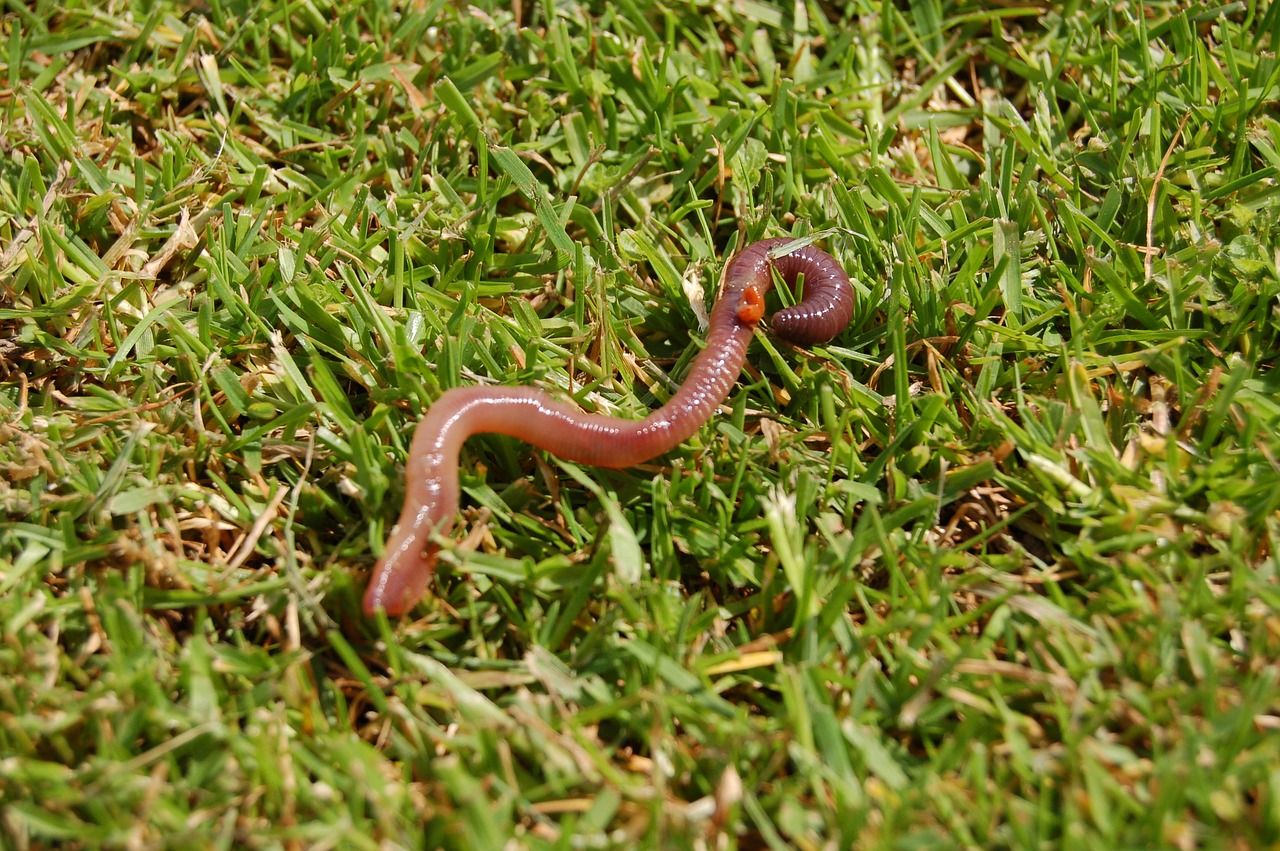
Ash Wednesday, 2026.
One of our local singer boasts a pin: It says “Tim’rous worms”, but overlaid with the international safety symbol for “No!” It, of course, references the Isaac Watts poem set in 111b TO DIE NO MORE and 275b ROLL ON:
Why should we start and fear to die?
What tim’rous worms we mortals are!
Death is the gate of endless joy,
And yet we dread to enter there.
The pin is a joke, of course. We joke about what we are uncomfortable about, and perhaps about ideas that we find outmoded. In this essay, written as a Lenten meditation, I would like you to pause and consider: what if worm theology is not ridiculous, but perhaps an accurate, if unflattering, description of the human condition?
There is no lack of references to worms in the theology and poetry of Isaac Watts. In our book alone, we quote four different poems in eight different songs. There are, I believe, 30 mentions in his Hymns and Spiritual Songs out of (I think) 365 hymns — practically, one mention per every ten hymns. It’s clearly an important image for Watts. What does he mean by it?
The good God creates a good universe
In his hymn on Genesis 1, entitled “The creation of the world,” Watts declares the goodness of God’s creation:
Thus glorious in the Maker's eye
The young creation stood;
He saw the building from on high,
His word pronounced it good.
That creation consisted of, among other things, the birth of “the lion and the worm,” that is, both apex predators and waste scavengers. They are part of the great creative act of God, who created the “spacious world,” the “moon and stars in order”, the sea, “herbs and plants,” fish and fowl, “grazing beasts”, and humanity itself. In his hymn, “The book of God’s decrees,” we are reminded that God orders all things, even lowly worms:
There's not a sparrow or a worm
But's found in his decrees.
Death, decay, and humility
As waste scavengers, worms are present at death and decay. Discussing worms act as a memento mori and a call to humility. In his hymn for Sermon 23, he writes:
What if we wear the richest vest,
Peacocks and flies are better drest:
This flesh, with all its gaudy forms,
Must drop to dust and feed the worms.
This echoes Job 17:14:
I have said to corruption, Thou art my father:
to the worm, Thou art my mother, and my sister.
This basic fact of the human condition should lead us to a stance of humility. In his Sermon 41, he calls us “poor dying mushrooms”:
Poor dying mushrooms, who start up for a few hours, but cannot assure ourselves of tomorrow! Today we swell and look big among men, tomorrow we are a feast for worms.
Death makes equals of us all, and remembering this is rule number 1 of “Rules to subdue pride and scorn” from his Doctrine of the Passions. “Shall a little finer house or finer clothes make a worm vain among his fellow worms and tempt him to scorn his kindred?” No, of course. Watts continues:
None of your vain distinctions in this life shall attend you to the judgment seat. Keep this tribunal in view, and pride will wither and hang down its head.
The pleasures of God are immensely greater than the pleasure of the world
This attitude of humility frees us from attachment to worldly pleasures and social advancement. The poem behind 55 CONVERSE is a very important poem, I think, for understanding Watts and his changing motivation for writing. I have placed the complete poem, Converse with Christ, elsewhere, but here are two verses, the first and the last. Only the first verse is in The Sacred Harp.
I’m tired of visits, modes and forms,
And flatt’ries paid to fellow worms;
Their conversation cloys,
Their vain amours and empty stuff,
But I can ne’er enjoy enough
Of Thy best company, my Lord, Thou life of all my joys.
Fly from my thoughts all humane things,
And sporting swains and fighting kings,
And tales of wanton love:
My soul disdains that little snare
The tangles of Amira's Hair;
Thine arms, my God, are sweeter bands, nor can my heart remove.
We can see Watts, practically in real time, deciding against a life of an 18-century man of letters towards a life lived for God. Compared to the “sweeter bands” of divine love, the vain flatteries paid to respectable men like the man he could be are like compliments paid to worms. Although, of course, Watts went on to write influential books on philosophy, logic, and theology, he primarily saw himself (as evidenced by his self-written epitaph) as a pastor. The poetry of his that we sing was written for ordinary people. When you consider the great English poets he knew or knew about — people like Pope, Milton, and Dryden — to consider himself and them as “fellow-worms” is humorous, but also pointedly and sincerely meant.
Our sinful wretchedness
As we have seen, the image of human vermicularity indicates that we are creatures vastly inferior in power, knowledge, and beauty to God our creator. Furthermore, we die and decay, unlike God’s own eternal life. We must also understand ourselves as vastly inferior in our goodness. I think is where our minds go when we first read or sing the worms “such a worm as I.” In one of Watts’s sermons, he talks about how Jesus, “that illustrious Friend” ransoms us, calling us worms but also rebels that deserve to die. This pairing certainly indicates that we are sinful creatures in need of rescue — a very common theme in Watts’s writing. I find it interesting, though, Watts generally use of worm to describe the human condition as lowly and frail creatures rather than evil creatures. After all, worms are not evil! They are part of God’s creatures.
One of Watts’s most famous poems is used three times in The Sacred Harp (290 VICTORIA, 310 WEEPING SAVIOR, and 375 LOVE THE LORD):
Alas! and did my Savior bleed?
And did my Sovereign die?
Would He devote that sacred head
For such a worm as I?
Watts entitled this poem “Godly sorrow arising from the sufferings of Christ,” and it certainly picks up on the theme of the gap in goodness between God and us, for he writes, “Was it for crimes that I had done / He groaned upon the tree?” and we blush and grieve. But Watts’s true focus, I think, is on the “Amazing pity! grace unknown! / And love beyond degree!” That is, Watts writes this poem to focus our own attention on God’s love for us: “God the mighty Maker died / for man the creature’s sin,” and also on our response to that love of gratitude and obedience: “Here, Lord, I give myself away, / ‘Tis all that I can do.”
Christ so identifies with us that he dies a death like ours. In his love for us, he lives a human life, and dies a human death. His death atones for our sinfulness: “atonement,” etymologically, comes from God’s “at-one-ment” with us. For the believer, his death (and resurrection) reconciles us with God. Watts surely had in mind Psalm 22, which Christians have read as pointing to Christ’s death since the earliest days of the church:
1 My God, my God, why hast thou forsaken me?
why art thou so far from helping me, and from the words of my roaring?
2 O my God, I cry in the daytime, but thou hearest not;
and in the night season, and am not silent.
3 But thou art holy, O thou that inhabitest the praises of Israel.
4 Our fathers trusted in thee:
they trusted, and thou didst deliver them.
5 They cried unto thee, and were delivered:
they trusted in thee, and were not confounded.
6 But I am a worm, and no man;
a reproach of men, and despised of the people.
Jesus quotes this psalm as he dies on the cross, and it’s significant that in the chorus of 310 WEEPING SAVIOR we sing:
Oh, come, sinner, you will hear
The Savior say, “Weep not for me”;
See the Savior on the cross!
Oh, sinner, hear Him cry,
“Eloi, Eloi,
Lama sabachthani!”
Those last two lines are just the first line of Psalm 22, “My God, my God, why hast thou forsaken me?” in Aramaic.
Conclusion
Honestly, I don’t know if it’s ok to chuckle a bit when we sing “tim’rous worms” or “fellow-worms.” The image of our lowly creatureliness is so much richer than a cheap jab at our ancestors’ language. It certainly can make us feel uncomfortable to be reminded of our physical, mental, and moral limits, and so it’s easier to joke. Such a vain, worm-like thing to do, in fact.
Watts in his Miscellaneous Thoughts tells a story of a man, Theophron, sitting by a fire: “by chance, he cast his eye on a worm which was lodged on the safer end of a short firebrand; it seemed very uneasy at its warm station, writhing and stretching itself every way for relief.” It’s not so great to be a worm on the end of burning stick. Such a worm, left to its own devices, will be unable to escape its fate. We are, of course, the worm in this story.
Theophron reflects:
What should such a soul do now, but pant and long hourly for a flight to the upper world? … O blessed voice from heaven that shall say to it, “Come up hither” and in the same instant shall break off all its fetters, give it the wings of an angel, and inspire it with double zeal to ascend.
As I said, I write this as a Lenten meditation. Our modern sensibilities tell us to avoid thinking ourselves as worms. But let me suggest recognizing our lowly creatureliness frees us to recognizing our true state: a lowly, but good creation of a good God, but brought even lower by our own choices. Away with low things! The dying Christ comes near to us in our lowliness, and brings us through the gate to endless joy. Why, indeed, should we start and fear to die?